
Mastering the Capital Stack: A Guide to Risk and Reward in Property Development
Real Estate InvestmentFinanceWhether you are a seasoned developer looking to fund your next skyscraper in West Africa or an investor diversifying a portfolio in the UK, understanding where your money sits in a deal is crucial. In real estate, this concept is known as the Capital Stack. But what exactly is the capital stack, and how does your position within it dictate your potential risk and return? Let’s dive in.
What is the Capital Stack?
Real estate investment rarely comes from a single pocket. It requires multiple layers of funding. The "Capital Stack" is essentially the hierarchy of these funding layers. It defines who gets paid first and who holds the most risk. By analysing the stack, you can better understand the potential return on your investment and make a more informed choice. Think of it as a pyramid. The lower you are on the stack, the safer your money is, but the lower your returns. The higher you go, the higher the risk, but the potential for profit becomes significantly larger.
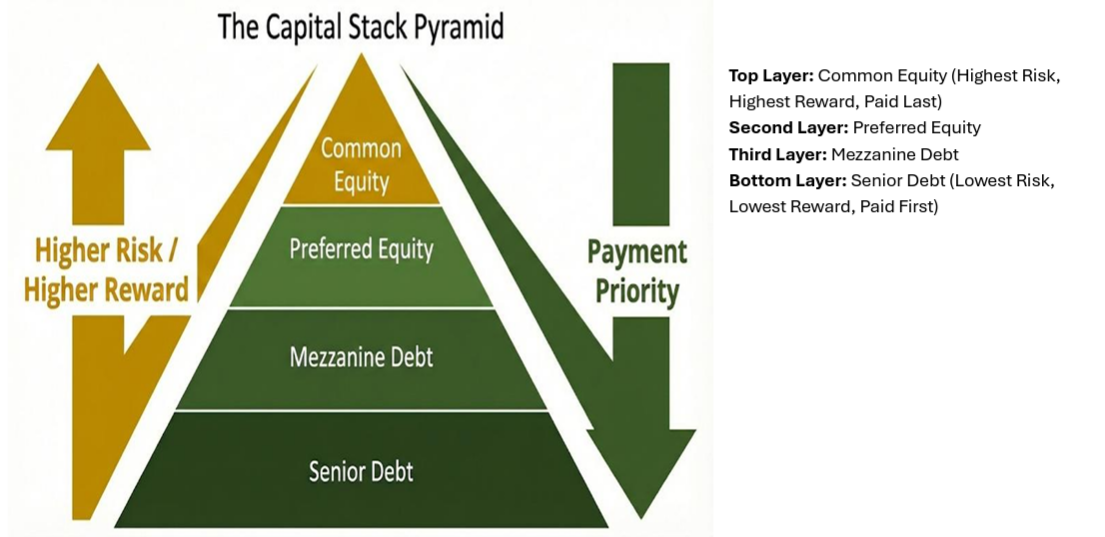
Layer 1: Senior Debt (The Foundation)
Risk Profile: Low | Return Profile: Fixed/Low
Senior debt is the "foundational bed" of the capital stack. This is typically a loan secured by a mortgage or a deed of trust against the property.
Why it’s safe: If the borrower defaults, the senior lender has the first right to claim the title of the property.
The Trade-off: As a senior debt lender, you are not entitled to a share of the profits if the project becomes a massive success. Your return is limited to the interest rate negotiated in the loan documents.
Layer 2: Mezzanine Debt
Risk Profile: Medium-Low | Return Profile: Moderate
Sitting right above senior debt is Mezzanine debt. These lenders are next in line for payment and generally receive regular repayments regardless of how the investment performs.
Security: Mezzanine lenders have limited foreclosure rights compared to senior lenders. If a borrower defaults, they can take control of the property, provided they don't violate the senior lender's rights (often governed by an inter-creditor agreement).
The Upside: It offers a higher rate of return than senior debt while carrying less risk than the equity layers above it.
Layer 3: Preferred Equity
Risk Profile: Medium-High | Return Profile: Flexible
Preferred equity bridges the gap between debt and common equity. It is highly flexible and often comes in "Hard" or "Soft" varieties:
Hard Preferred Equity: Requires returns to be paid regardless of performance (similar to debt).
Soft Preferred Equity: Payments are only made if there is sufficient cash flow. Investors here often enjoy a "preferred rate of return" and may even share in the project's profits, offering a greater level of security than common equity.
Layer 4: Common Equity (The Peak)
Risk Profile: High | Return Profile: Uncapped (High)
At the very top sits Common Equity. This is considered high-risk, high-reward investment.
The Risk: Repayments are prioritised for everyone else first (Senior, Mezzanine, and Preferred). If the investment underperforms, common equity investors risk losing some or all their initial capital.
The Reward: Unlike debt lenders, returns for common equity investors typically aren’t capped. If the property sells for a massive profit, the common equity holder reaps the biggest financial reward.
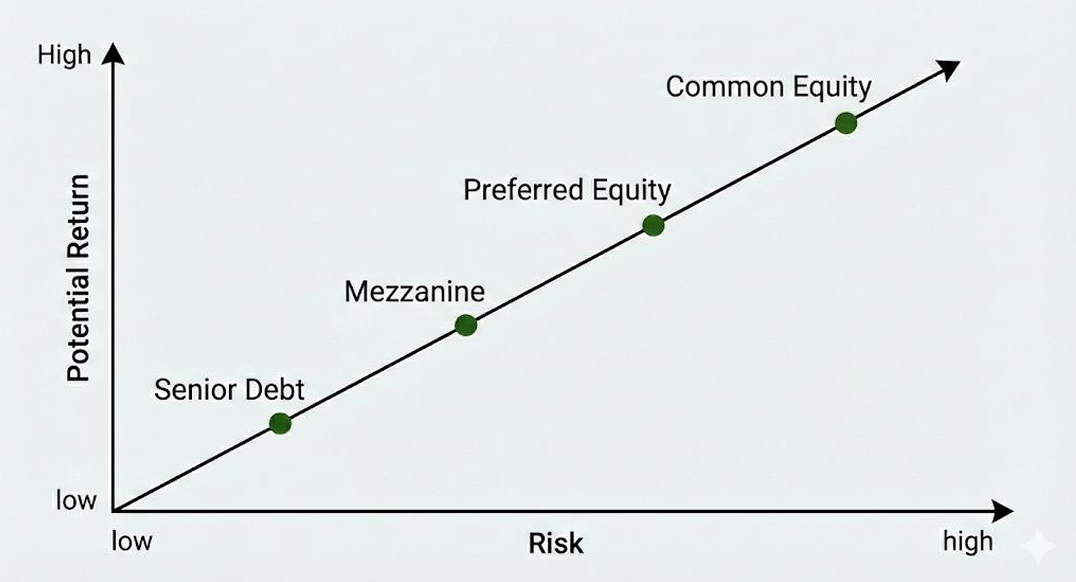
Choosing Your Position
Your position in the stack depends entirely on your strategy.
Risk-Averse Investors: If you prioritise security and consistent repayments, you belong in the lower levels (Senior Debt).
Risk-Tolerant Investors: If you are chasing "outlier" returns and willing to weather potential losses, the equity layers are where you can find significant profit margins. Whether you are looking into Land Banking—purchasing plots to hold for future development—or funding a high-rise, understanding the capital stack is the cornerstone of protecting your portfolio.
Need Strategic Advice on Structuring Your Next Deal?
At RealServInc, we don't just connect you to professionals; we help you navigate the complexities of real estate finance. Our Advisory Team specializes in helping SME Developers, HNWIs and Corporations structure efficient capital stacks to maximize returns and mitigate risk. Don't leave your investment structure to chance.
Contact RealServInc Advisory Today
Disclaimer: This article is for informational purposes only and does not constitute financial advice. Always consult with a professional advisor before making investment decisions.


